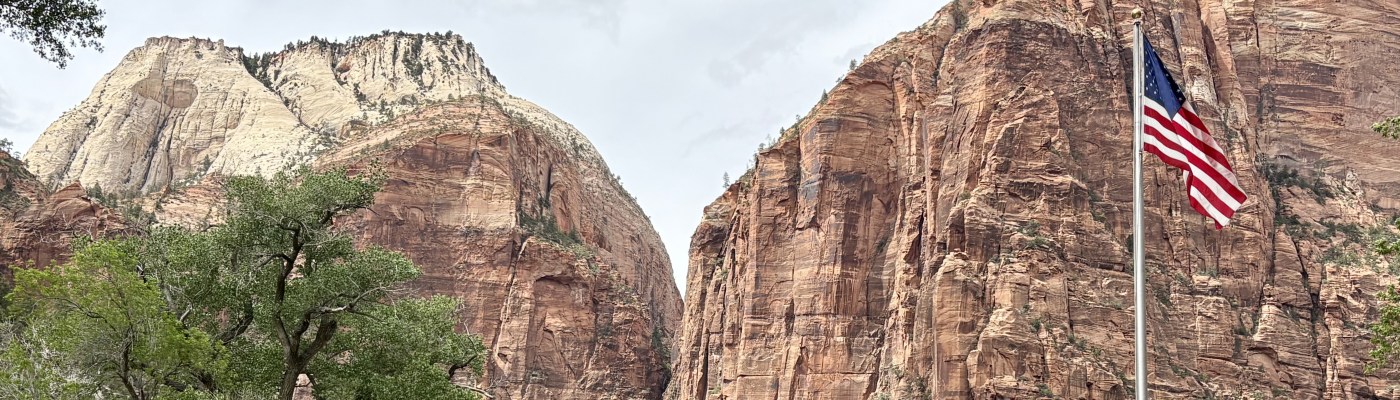
Our National Park system is vast and expansive. Its mission to preserve and protect the natural and cultural resources for this and future generations. It’s a tall order. And it, like many of our federal and national systems, has been facing cuts to budgets, staff, and morale. Still they are open and welcoming visitors from all over the world. One of the things I love the most about visiting National Parks is seeing the families who are clearly visiting from very far away. It’s obvious from how they dress and the languages they speak that they traveled very far to come see the best of America. I feel very proud to be an American as we host these guests. And while it’s gotten a lot harder for tourists to come to the US these days, people still do come. I love seeing the parks through their eyes. The things we grew up with seeing on TV, in cartoons, Westerns, movies, and books laid out in front of us. Old Faithful erupting. The Grand Canyon in all its undefinable splendor. The jagged peaks of the Tetons. The sheer raw beauty of the Kenai Peninsula. It’s awe inspiring to see these places in person, and I am so happy for everyone who gets the chance to visit.
We have seen some incredible places as we chase National Parks across the country. We have our lifetime membership pass, which is precious. It’s a golden ticket granting unlimited access. Because we are collecting national parks, we have picked up one of the little passport books where you get to date stamp your visit and add travel stickers. “STAMP! STAMP!” I say, tapping my left fist into my right open palm. Let’s go! “STAMP! STAMP!” we say as we look at the map and try to route through more parks. The little book is filling up quite nicely.
We’ve been busy STAMP! STAMPing. After today we have seen 36 of the 63 US national parks. On this particular stretch of travel we swooped back into the Southwest and saw the Petrified Forest, the Great Sand Dunes, the Grand Canyon, Zion, Bryce, Capitol Reef, Mesa Verde. (While not technically national parks, we also enjoyed Grand Escalante Staircase, Kodakrome State Park, Valley of the Gods, Goblin Valley State Park.) We’ve been to four of the eight national parks in Alaska: Kenai Fjords, Lake Clark, Denali, Wrangell St Elias. We enjoyed the bonus of three of the National Parks in the incomparable Canadian Rockies: Banff, Jasper, Waterton Lake. And then we racked up another pile of them as we make our way back across the lower 48: Glacier, Yellowstone, Grand Tetons, Wind Cave, Theodore Roosevelt. Some were repeats of our favorites. Some were new. All were offering incredible natural beauty, striking geologic formations, specific flora and fauna, and a chance to learn something new and interesting.
As I begin processing the hundreds of pictures I took over the course of this spring and summer, on the surface many are similar: Rocks, trees, water, plants, animals. Everywhere I took pictures of rocks, trees, water, plants, and animals. Clearly, I have a type. But the waterfalls in Glacier National Park were different than the waterfalls in Yellowstone. The hoodoos of Bryce are completely different from fjords in Kenai. The columbine that grows in Zion is different than the fireweed in Alaska. The red rocks in Utah, the yellow stone in Wyoming, the black peaks in Alaska. It all rhymes. And it all rings my bell.
My joy in all of these places comes from seeing the animals and the plants. I absolutely become a child again whenever an animal appears. Bison, moose, elk, caribou, grizzly bear, black bear, cinnamon bear, mule deer, white tail deer, pronghorn, antelope, prairie dog, porcupine, chipmunk, birds. They all get my gleeful attention. I use the Merlin app to ID bird song. I use an app called Seek to identify plants and insects. I’m one of those people who stop for scat. This particular trip I really geeked out on alpine flora. It’s incredible. So tiny. So hardy, yet so fragile. So diverse. So colorful, yet practically invisible to the inattentive. I also reveled in the roadside wildflowers. The time of year and the areas we traveled really allowed us to appreciate the colorful changing seasons. Early on the light greens, pinks, and yellows gave way to purples, orange, white, and red. And then, as we got deeper into the heat of summer and as we moved further from the raw nature and closer to civilization and cities, the wildflowers pretty much vanished.
Now I’m writing this entry from Duluth, Minnesota, and the air is thick with smoke from massive wildfires currently raging in the Canadian arboreal forest. It feels such a long way from the clear frozen Ruth glacier on top of Denali, but not too far from the charred re-birthing of Jasper. Fire is a natural part of the cycle of forests, but it is sad, especially when it so severely impacts people, animals, and property. My heart is with our Canadian neighbors as my eyes sting and my lungs struggle. I’m happy we were able to see as much as we have seen, but we may be modifying our travels with the current weather situation. Stay tuned.

