
We’ve been in San Miguel de Allende for one week already. There is a lot of culture, history, and art to take in and appreciate. I love that we are pacing ourselves because we have the luxury of a month to explore what is quickly becoming one of our favorite destinations. We aren’t alone in that assessment. Travel and Leisure Magazine named it “The Best City in the World.” It is a vortex for expats, tourists, and artists. Clearly, it’s an inspiring city, as there is art everywhere you look. I even find myself drawn to photography and writing again while here. Those passions compete for my time with my language acquisition progress, which I am very much enjoying. There’s just not enough time in the day to do all the things I want to do. But before I get back to my studies, I’ll take this opportunity (weekly blog post) to write a little about some observations and experiences.
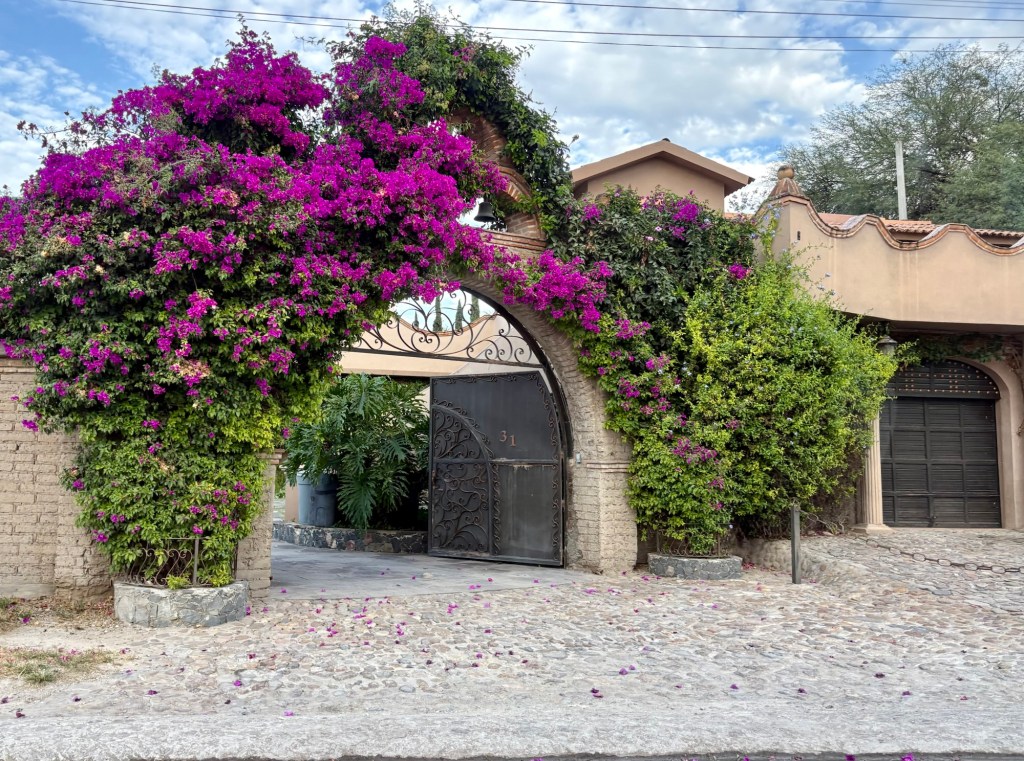
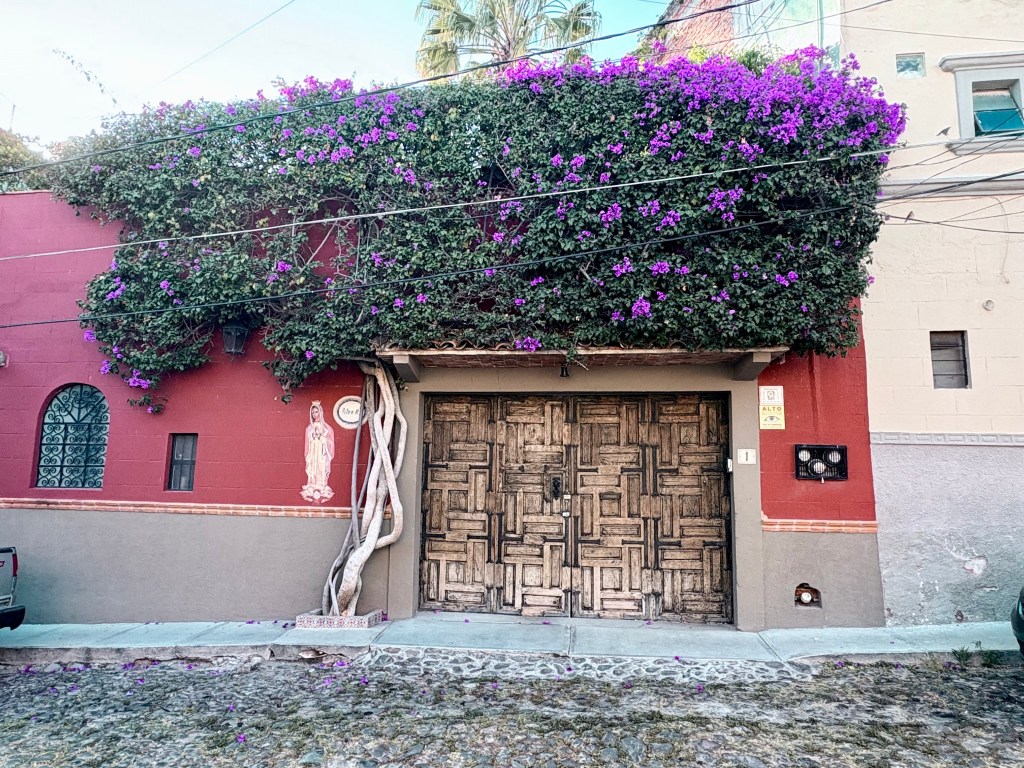
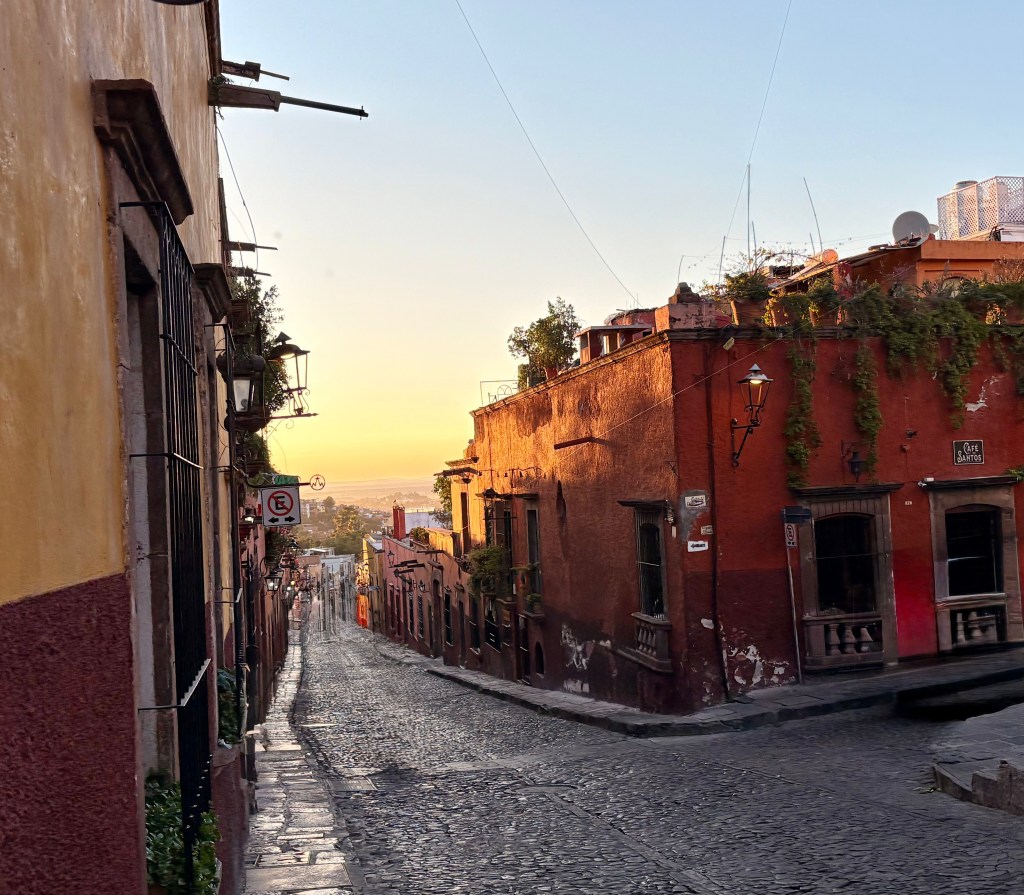
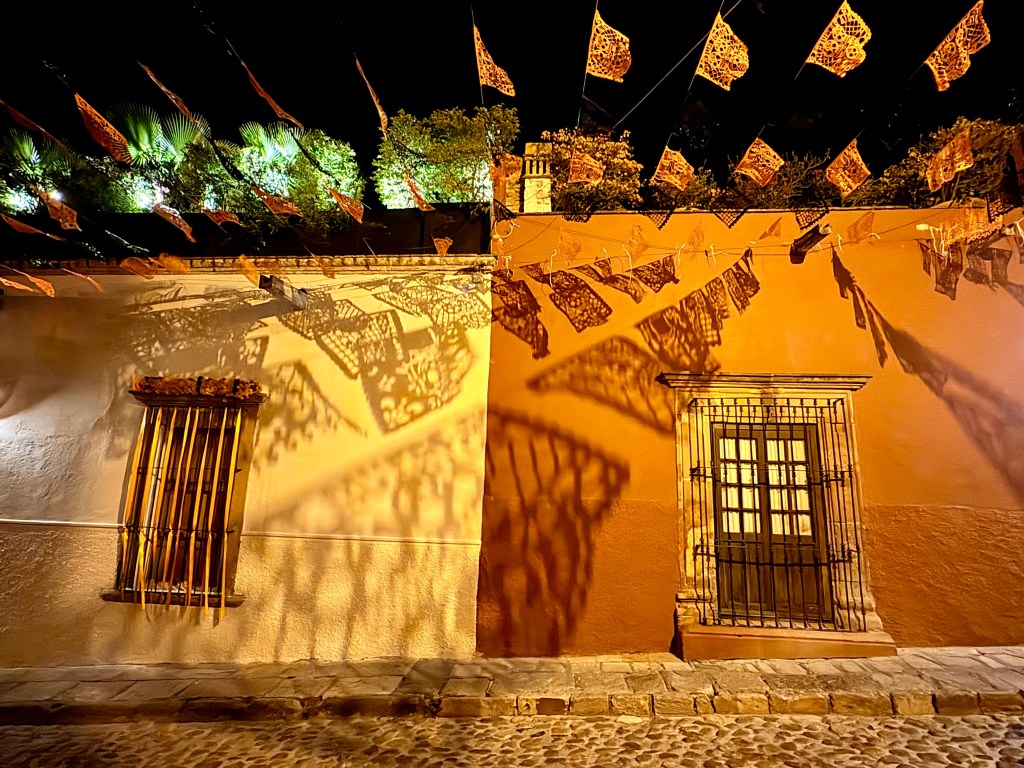
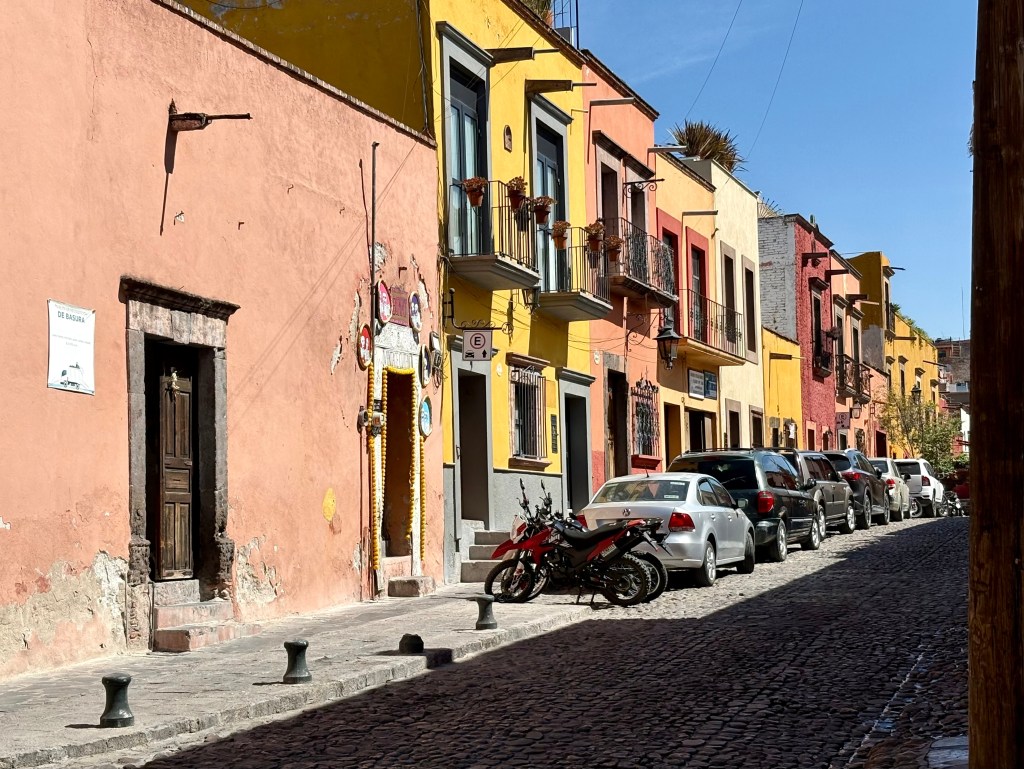
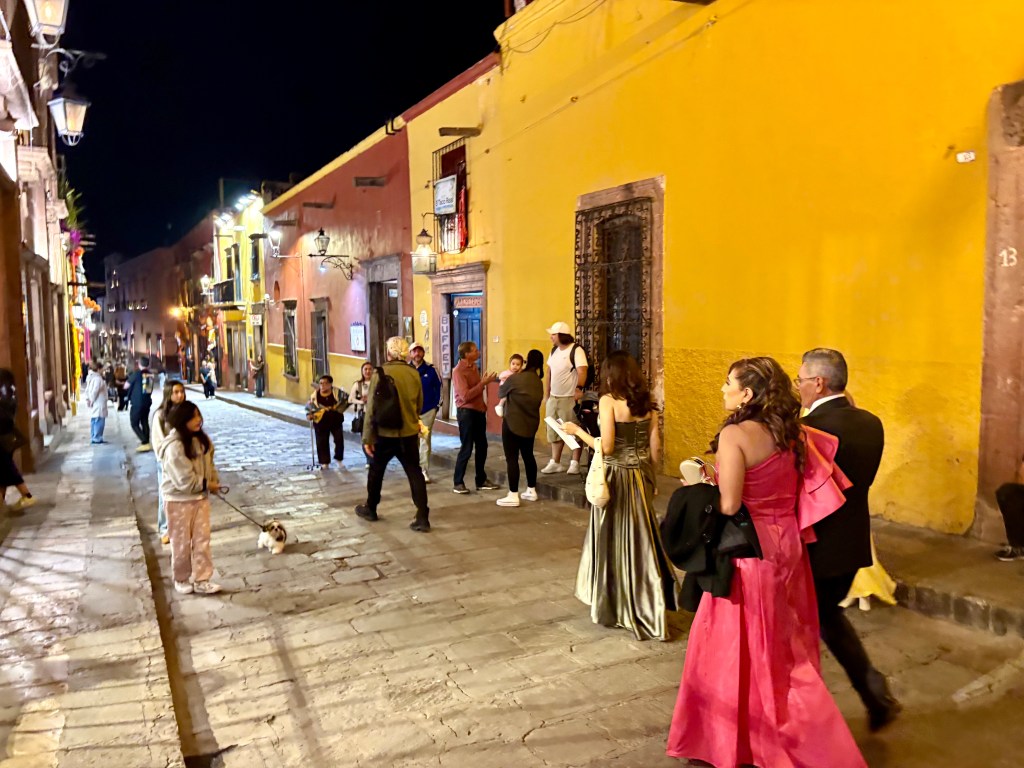
San Miguel de Allende was founded in the 1500s. Many of the colonial era buildings are from the 1700s. It is a hilly labyrinth of cramped, cobbled streets, ancient and magical, colorful and welcoming, with enchanting shadows and inviting alleyways. Textures here are tile, stucco, rough-hewn wood, and well worn stone. Sounds here are fireworks, barking dogs, parades, mariachi music, laughter, construction, church bells, and many vehicles in various states of disrepair. Colors here are vibrant. Bougainvilleas are everywhere and in every shade, attracting butterflies and hummingbirds. Bright pops of purples and pinks against the ochre, burnt umber, sienna, and rust buildings that are tightly placed, with often only narrow, single-filed, uneven stone sidewalks separating the inside of the building from the motor scooters, buses, and cars wending their ways through the bumpy streets.
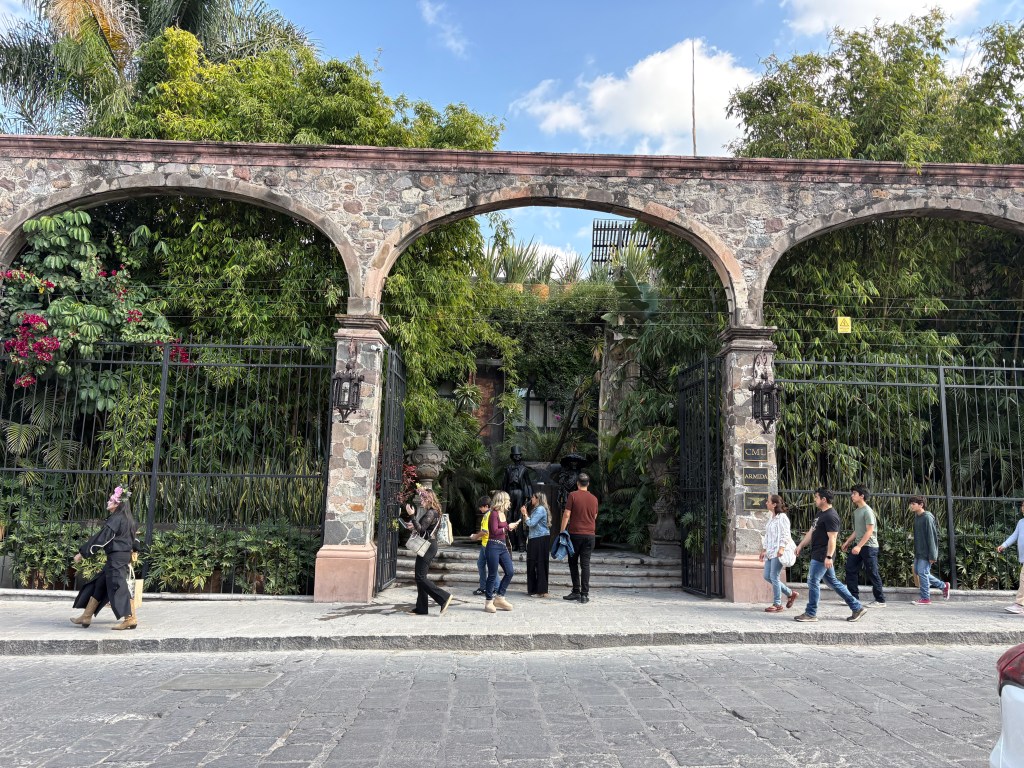
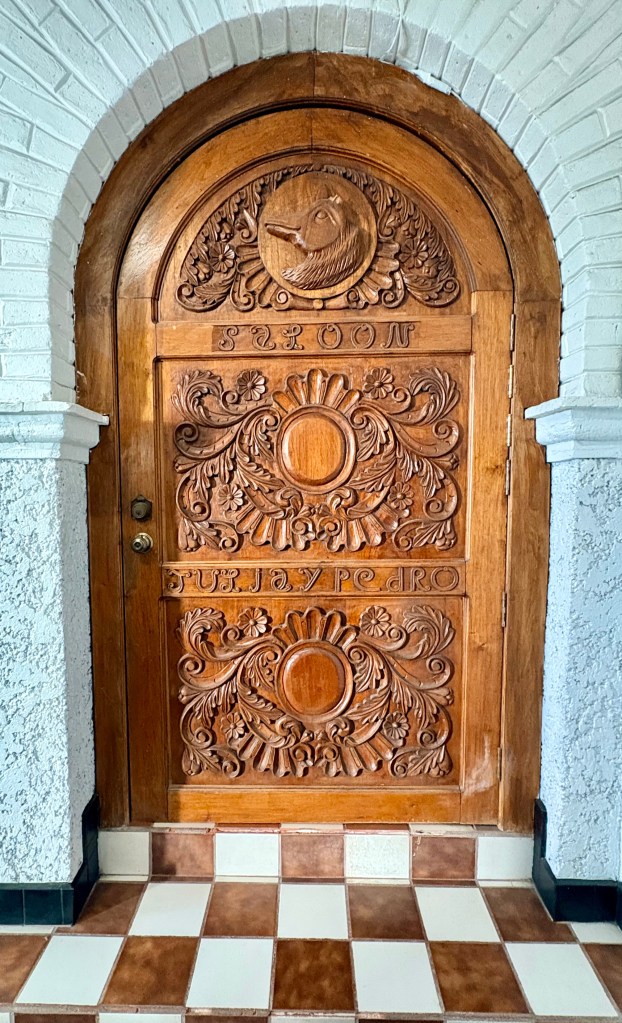
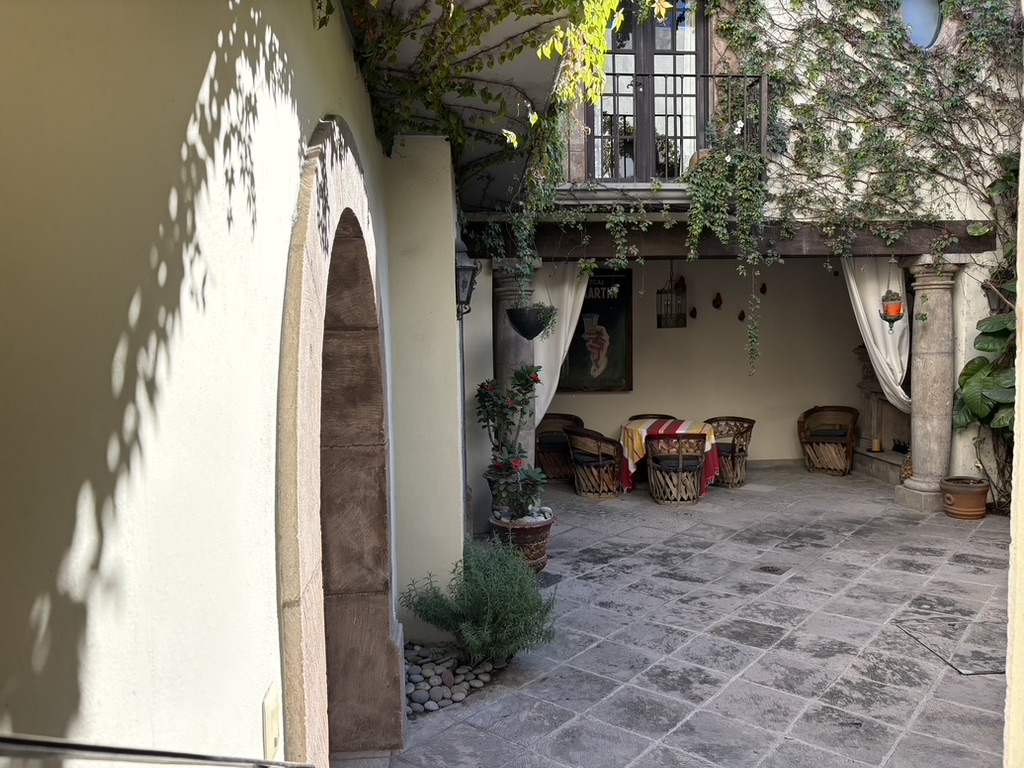
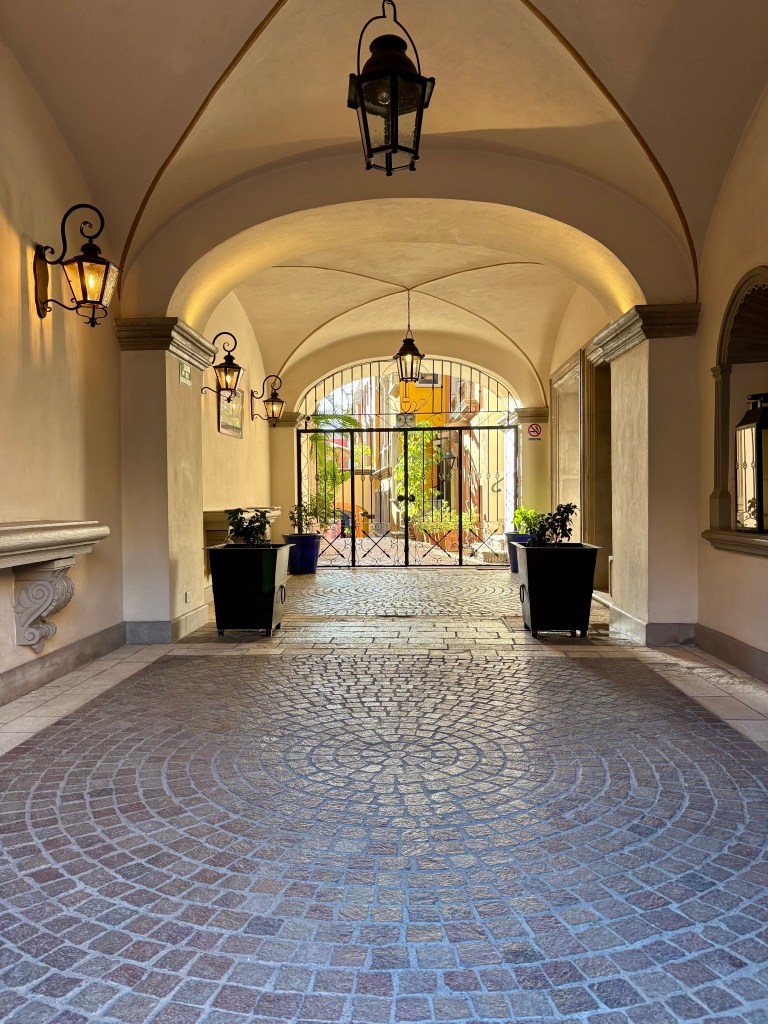
There is a secret, hidden world in San Miguel de Allende within those buildings. The iconic architecture of this city is such that you just never know what is on the other side of the wall. Closed doors — some impressively imposing, but most simply nondescript — hide homes, businesses, shops, classrooms, art galleries, studios, restaurants, salons, co-ops. If the tall, narrow double doors are open, they invite you to peek in and marvel. You may find unexpected vastness in tree filled courtyards. Surprising pathways through an entire block revealing micro businesses tucked in every corner. Narrow food services stations open only on the weekends. Complicated businesses shapeshifting into the spaces created centuries ago, and now operating within the constraints of a protected UNESCO World Heritage City.
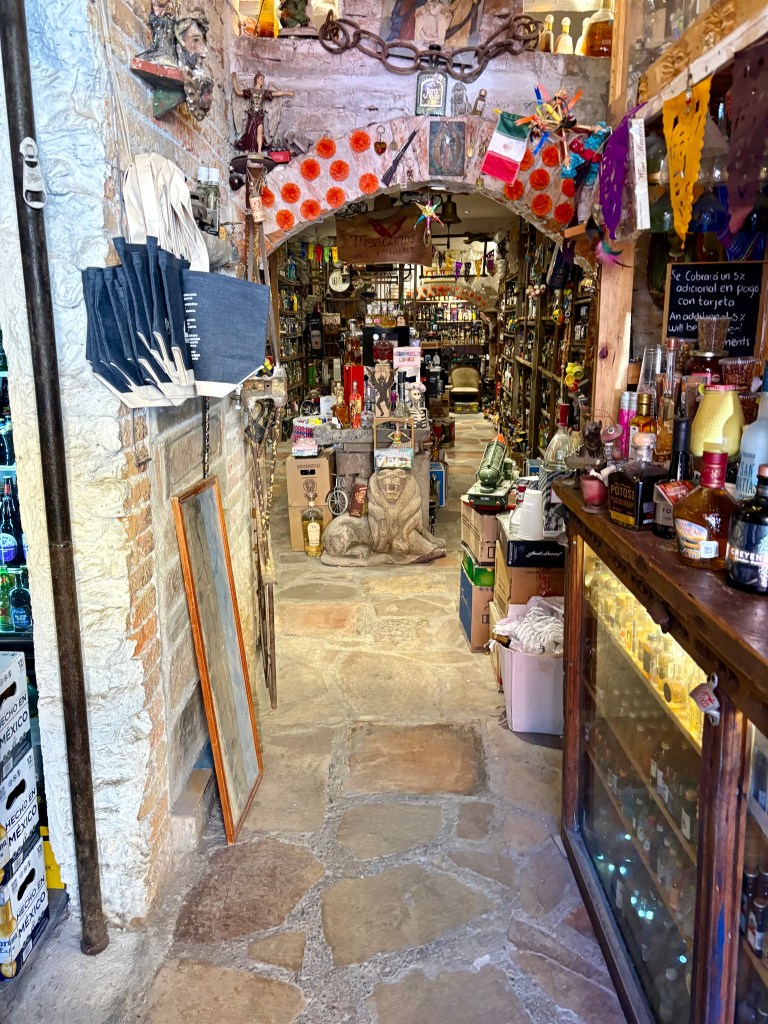
As one example, yesterday when we began exploring our hyper local neighborhood, we found a tienda de bebidas in the most incredible, ancient space. We walked through the open French doors, down a few worn, uneven stone steps into a perfectly medieval space. The archways, the stone floors, the wall nooks were all just so cool. Every space was filled in creative and interesting ways. It felt like what a liquor store on Diagon Alley would be like. It was beautifully organized, tidy and overwhelming with how much merchandise was in such a limited space. I would have expected some bottles to be dusty like it gets in wine cellars, but it was all well tended. The shopkeeper was friendly and kind, with twinkling eyes. He enjoyed speaking a little English with us.
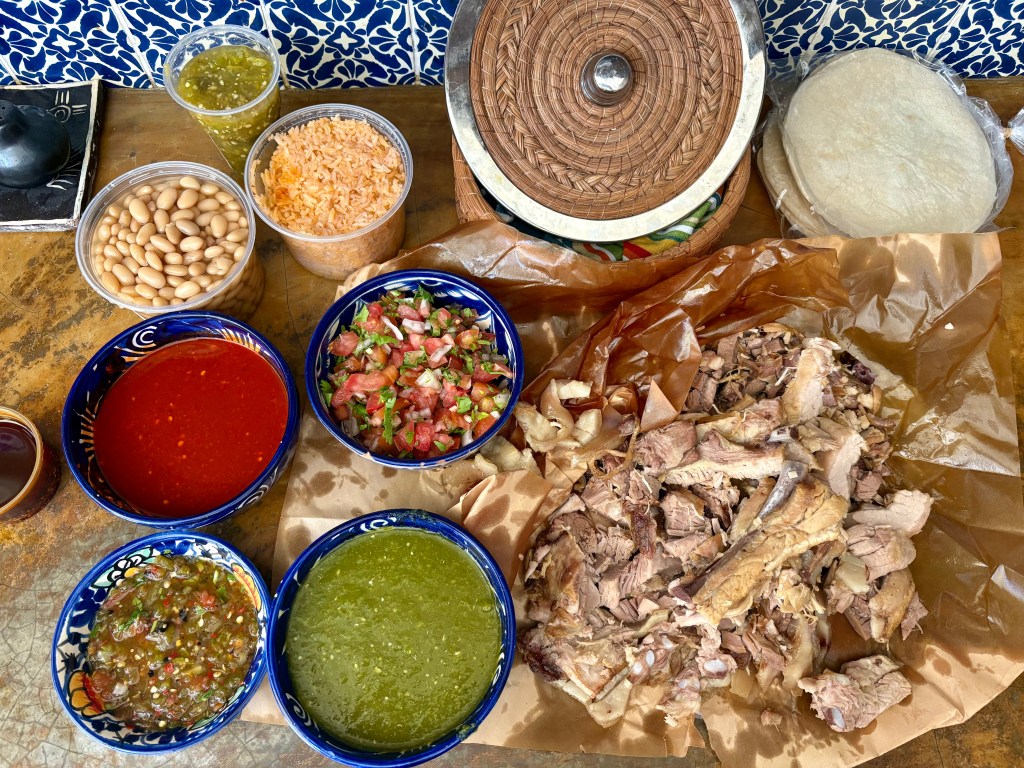
Deeper into the neighborhood down Calle Canal, we found a tortillaría and a carnicería in close proximity to each other. Those both were cash only, had no English, and no outward signs; if the doors had been closed you’d never know they were there. They each were relatively small spaces. The tortillaría had a counter at the front and a fairly spacious workspace in the back. One old woman and one young girl were running the operation. The carnicería was a long, narrow shop with four women working the counter, cutting the pork, cooking the few limited dishes offered to eat in house. There were four little tables crammed in the back with local families gathered around them. Where the tortillaría was quiet and sleepy, the carnicería was hopping and fast. Before we knew it, it was our turn at the counter. We ordered a kilo of mixed pork because I hadn’t learned the word for a half kilo and we were on the spot and I panicked. (The word is medio, by the way. I certainly won’t forget it going forward, because, honestly, we did not need a kilo of pork, as delicious as it was).
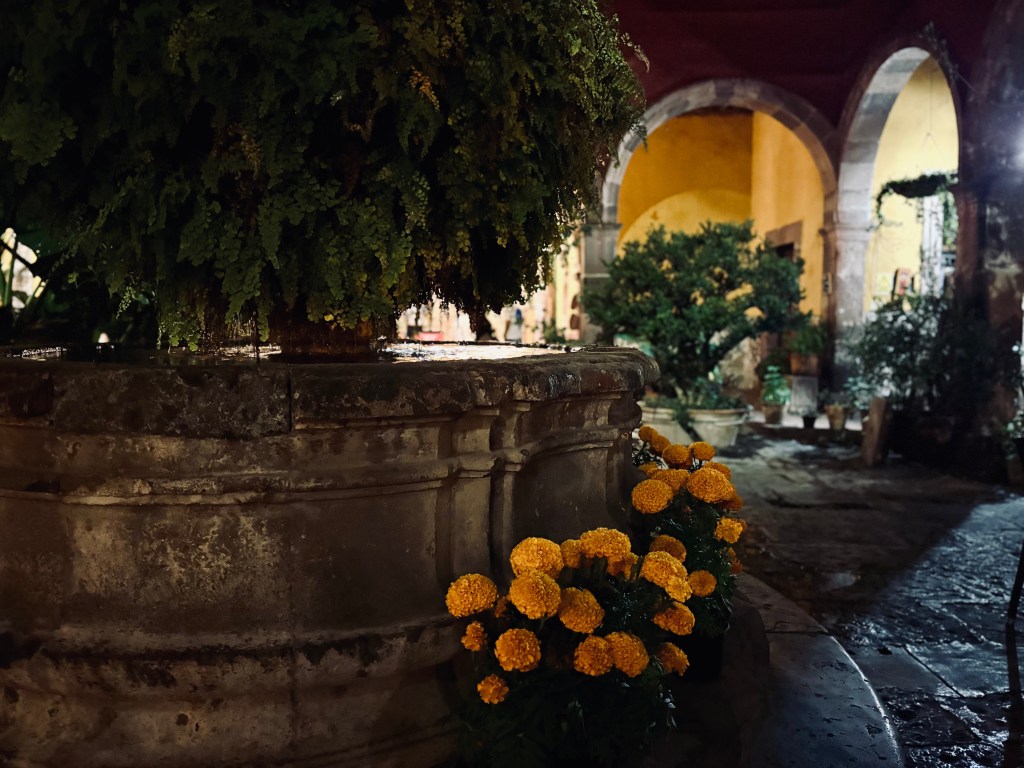
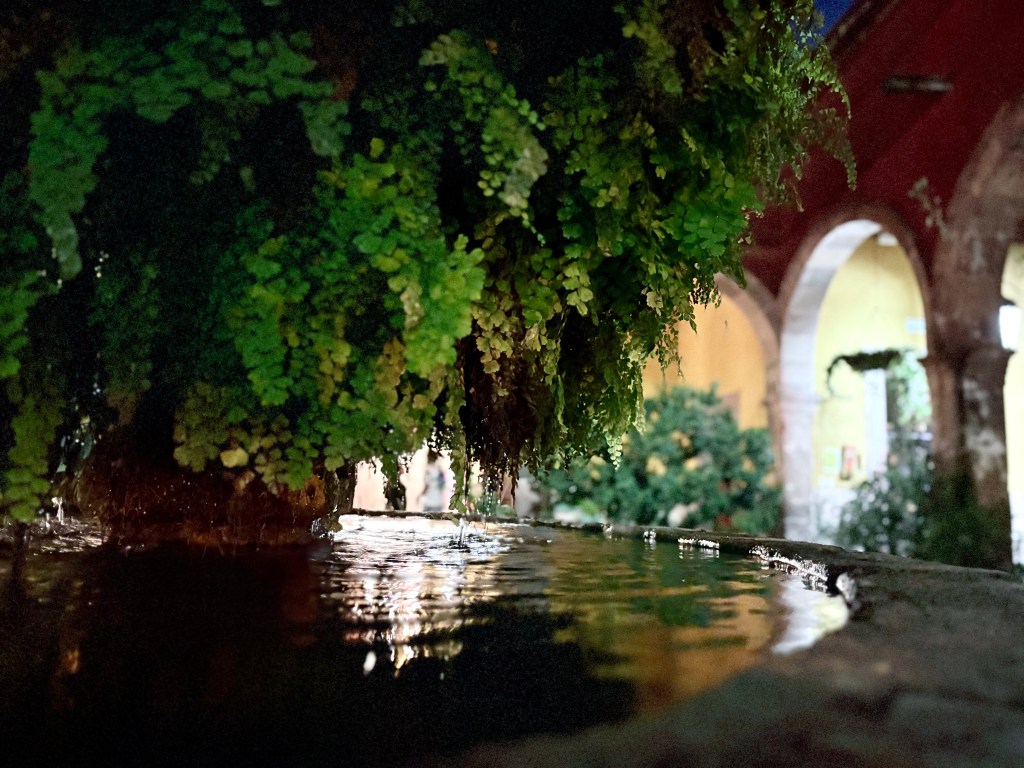
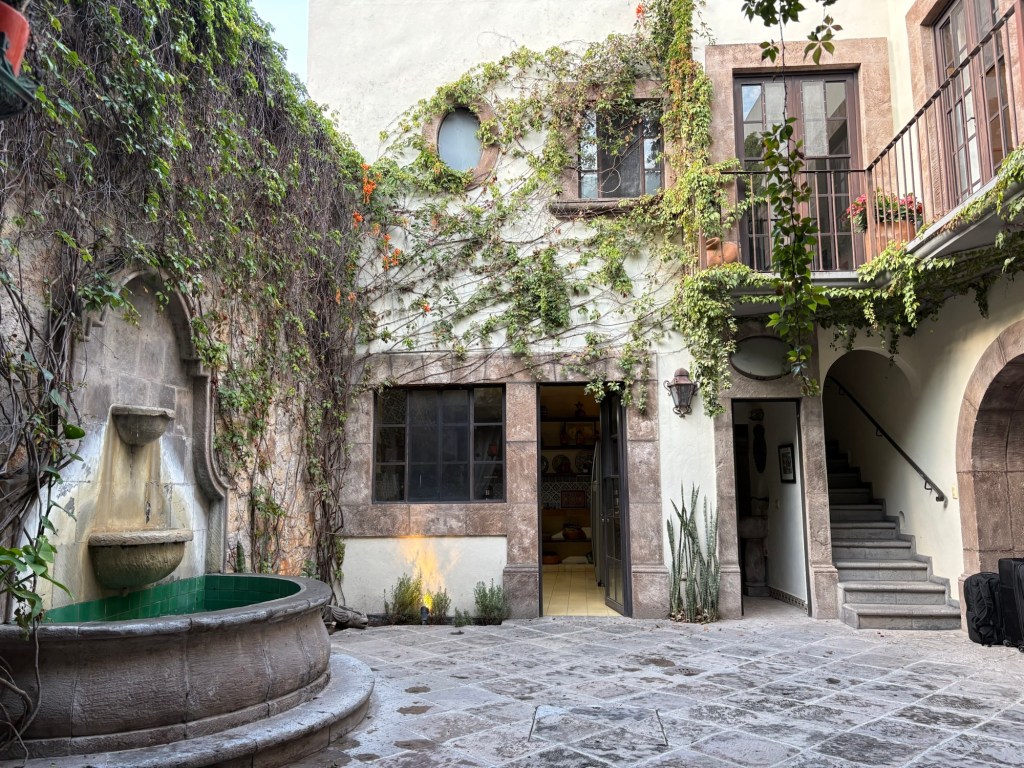
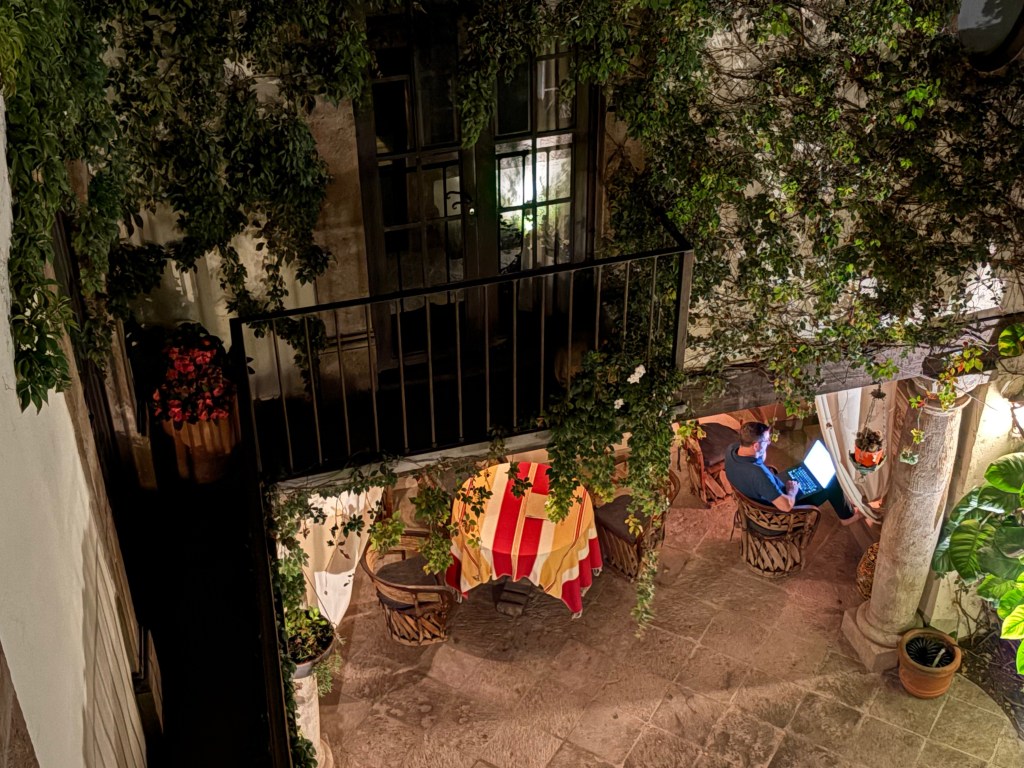
They double wrapped the carnitas in butcher paper and then put it in a clear, plastic bag. The three different salsas they supplied were also put into plastic bags. It is unusual for us to see clear bags of liquids, but it’s common here. They also were handing out samples of little tortas topped with a spicy shredded carnitas to those in line. It was such a simple enjoyable experience, different from anything we’ve done at home. Loaded with our local goods, we walked the narrow, steep, cobbled streets back up to our place, entered our own non-descript double doors, passed through our own surprising courtyard and fountain, and enjoyed all the provisions we successfully procured.
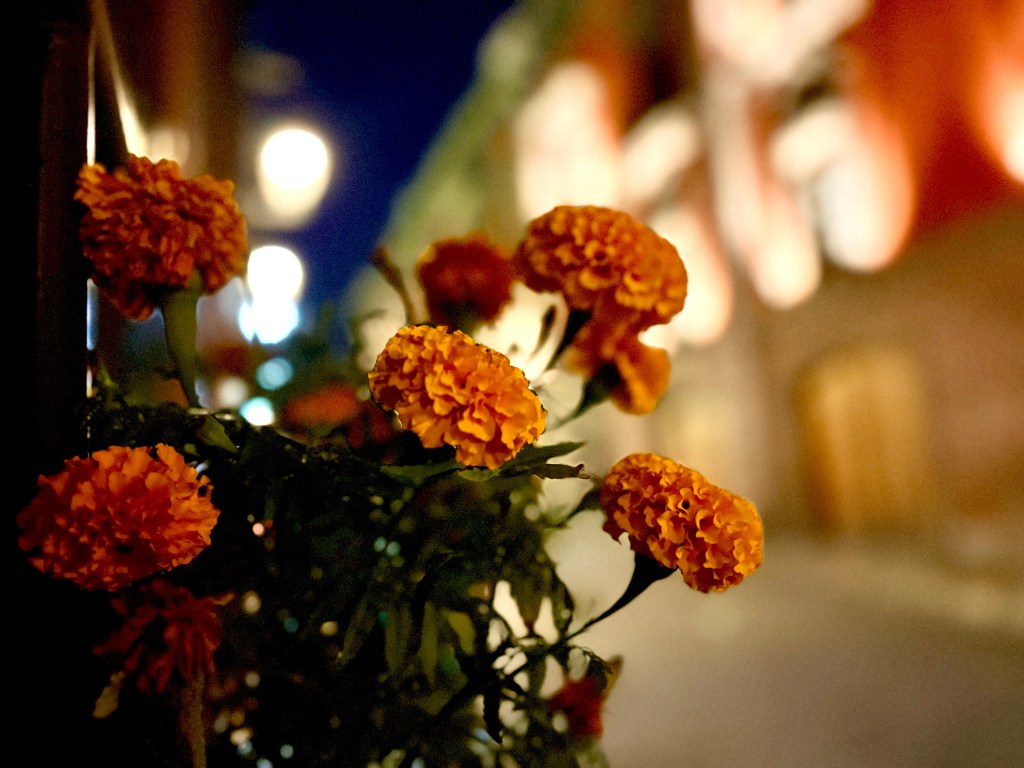
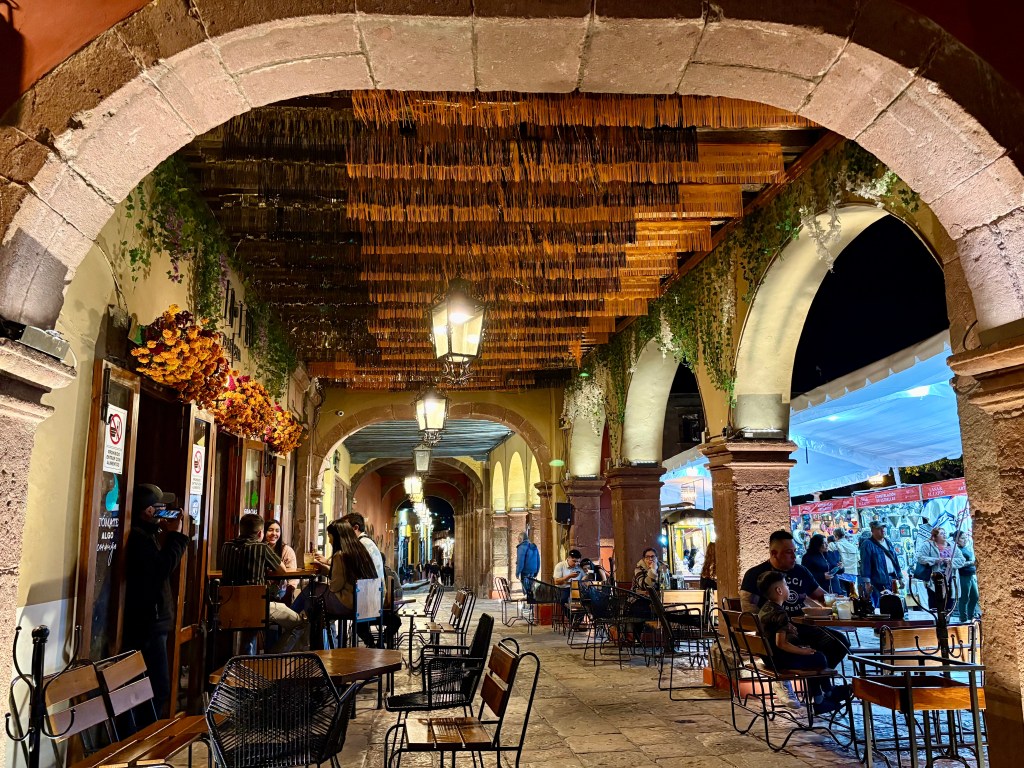
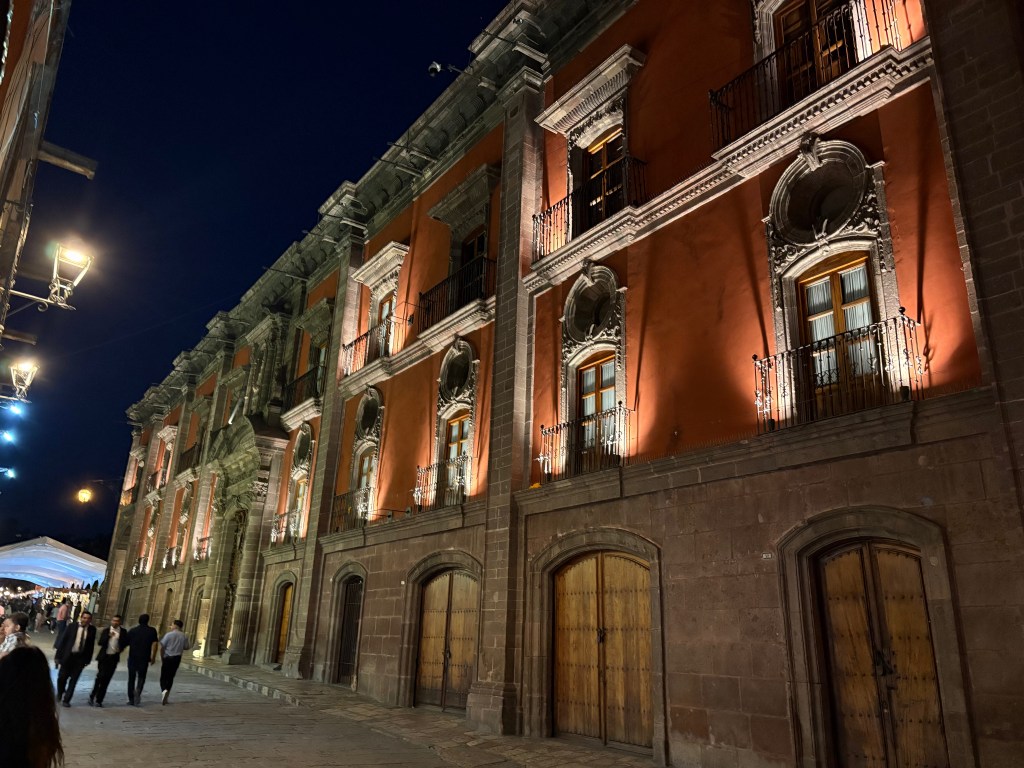
Later that evening, once the sun had set and the temperatures had dropped, we meandered into the town, to continue peeking in doors and archways. We drifted in and out of parks and courtyards. The church doors were all open for their evening masses. The lights of the town were inviting and warm. Among the crowds were merchants of all kinds. One man was selling hats piled high on his head; several old women were peddling hand crafted dolls; cart merchants were selling balloons and colorful toys and trinkets. Right around 9:00 pm, all these vendors started packing up and moving out, while roving bands of mariachi musicians and food carts started rolling in. The crowds started changing too, from families, church goers, and tourists, to the young and beautiful heading to the bars and clubs, wearing impeccable clothing and impossible heels. That was our signal to head back to the house and tuck into bed, full of childlike wonder, gratitude, and un medio kilo de carnitas.












 Empty Nest Wanderings